The rise of Cursor, Copilot + VSCode, Replit, and Qwen2.5 among others, have caused me to rethink my ways. Focus will still be key in discerning what to build.
AI development environments change the global technology conversation. They also influence the pace of hiring and team augmentation decisions.
Qwen2.5-Coder Open Source
Alibaba Group has released the Qwen2.5-Coder open-source model. Qwen2.5-Coder-32B-Instruct is currently the best-performing open-source code model (SOTA), matching the coding capabilities of GPT-4o. Qwen2.5-Coder offers six different model sizes: 0.5B, 1.5B, 3B, 7B, 14B, and 32B.
Each size provides both Base and Instruct models. The Instruct model engages in direct dialogue. The Base model serves as a foundational model for developers to fine-tune.
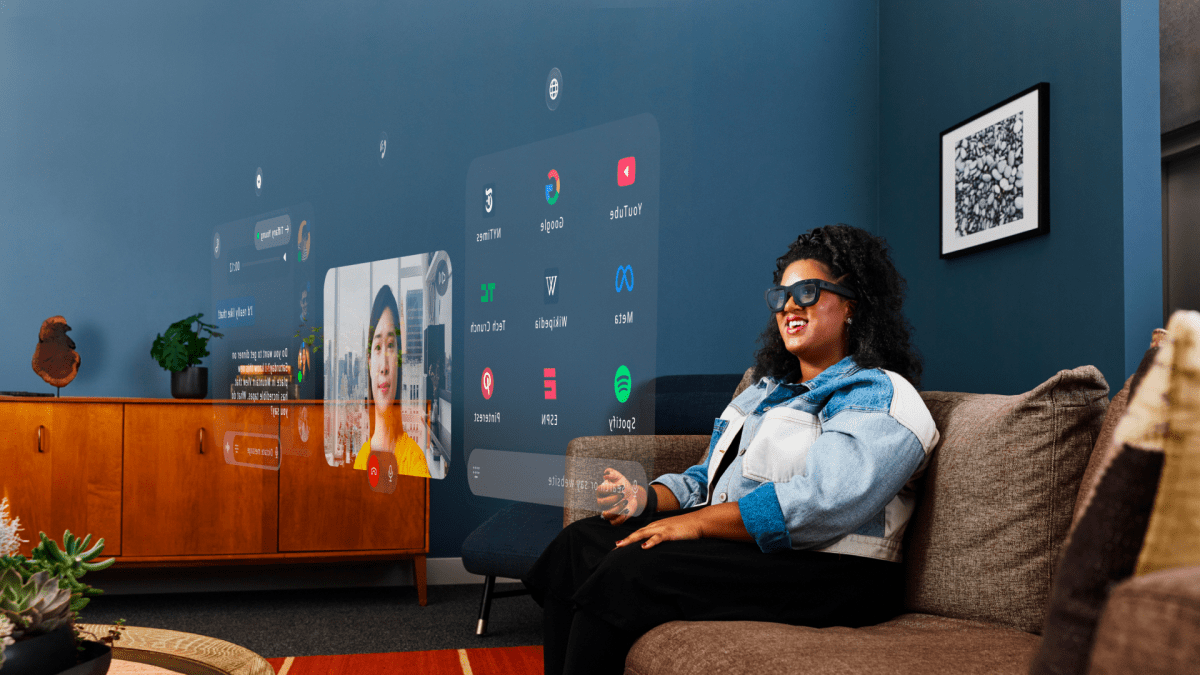
Sophia Dominguez, the Director of AR Platform at Snap, discussed Snap Spectacles and the company’s AR initiatives at the Snap Lens Fest original post here.
Snap Spectacles can be connected to a battery pack for extended use beyond the standard 45 minutes, with a focus on B2B interactions that directly engage consumers.
There is a push for Snap to collaborate with various businesses, such as those in location-based entertainment or museums, to expand the Snap Spectacles ecosystem.
Sophia Dominguez has been involved in AR for over a decade, starting with Google Glass, and now oversees developers and partners creating lenses on Snapchat.
Snap’s approach to AR emphasizes personal self-expression as a catalyst for AR lenses, transitioning to world-facing AR lenses like those in Snap Spectacles.
Snap’s long-term vision is to make AR ubiquitous and profitable for developers, aiming to integrate digital objects seamlessly into the real world.
Snap’s focus on consumer-level AR use cases includes self-expression as a core feature, offering a variety of options for users to engage with AR content.
Snap’s AR platform also caters to enterprise and B2B applications, collaborating with stadiums, museums, and other businesses for unique AR experiences beyond consumer-facing lenses.
Snap’s technology, like Snapchat cam, is designed for venues to integrate into large screens or jumbotrons, focusing on consumer desires for virality and joy rather than just enterprise solutions.
The company aims to increase ubiquity by making lenses fun and approachable, partnering with entities like the Louvre to explore augmented reality possibilities in a consumer-friendly manner. HTC Vive has delved into location-based entertainment more than Meta, and Snap is prioritizing connected experiences, ensuring fast connectivity and optimizing for various use cases like museum activations.
Snap collaborates closely with developers, offering grants and support without strings attached to foster innovation in the augmented reality space, aiming to be the most developer-friendly platform globally.
Snap’s Spectacles have evolved over the years, from simple camera glasses to AR display developer kits, with the latest fifth generation focusing on wearability, developer excitement, and paving the way for consumer adoption.
The company has revamped Lens Studio to encompass mobile and Spectacles lenses, emphasizing ease of use and spatial experiences, aiming to create a seamless ecosystem for developers across different platforms.
Snap values feedback and collaboration with developers, striving to provide pathways for monetization and support for creators building on both mobile and Spectacles platforms.
Snap’s Spectacles offer a unique immersive experience, leveraging standalone capabilities and spatial interactions, aiming to enable emergent social dynamics and experiences not possible on other devices.
Developers are considering the length of time users spend on devices like Zoom calls or workouts, with a focus on creating a seamless experience for users on the go.
The new SnapOS manages a dual processing architecture for Spectacles, with Lens Studio being the primary pipeline for developers to create content for the device.
Snap is actively listening to developer feedback and working on enabling WebXR on Spectacles to support a variety of use cases and experiences.
The operating system for Spectacles includes features like connected lenses, hands and voice-based UI, and social elements out of the box to facilitate easier development.
The ultimate potential of spatial computing is envisioned as a way to break free from the limitations of screens, allowing for more natural interactions and connections in the real world.
Snap aims to empower developers to explore the possibilities of augmented reality and spatial computing, emphasizing ease of use and continuous improvement based on user feedback.
Meta offers a unified account management center for Meta Horizons, Instagram, and Facebook.
Meta Account Center
Context:
Meta’s diverse set of platforms has a singular center for account management, called Account Center.
A unified account and identity system is crucial. We all increasingly sync data from one application to another.
Though, I have questions about how identity, security, single sign-on, and seamless connected experiences will be handled in the future. These questions will be charted through multiple posts.
Account Center is focused on accounts on Instagram, Facebook (Big Blue), and Meta Horizon at the moment. Given the backdrop of the metaverse, Meta is building towards… it is in service of their interests to set a high bar on how the unification of platforms will work.
Why does this matter?: Areas I mean to explore further
1. Account Center functions for different platforms like IG, Horizons, or Facebook. But how come other Meta-owned platforms (i.e. WhatsApp) aren’t there yet? When / what will be the expansion of this from Meta into a standard we can all tap on?
2. Potential challenges and benefits of identity management in the metaverse and where turn-key solutions can exist.
3. Real-life scenarios and/or case studies to illustrate the impact of the Account Center on user experience.
Taxonomy of Account Center
The Account Center delivers its services through several key components:
• Profiles: Centralized management of user profiles across different platforms.
• Connected Experiences: Seamless integration and data synchronization between applications.
• Password & Security: Enhanced security measures and password management.
• Personal Details: Management of personal information.
• Your Information and Permissions: Control over data sharing and permissions.
• Ad Preferences: Customization of ad settings and preferences.
• Meta Pay: Unified payment system across Meta’s platforms.
• Meta Verified: Verification service for enhanced account credibility.
• Accounts: Overall management of linked accounts.
Meta’s Account Center and other solutions are a significant step towards unifying user experience. Meta can set a high standard for account management in the emerging metaverse. This can be similar to the post we saw from Zuckerberg evangelizing open-source models. This action will expand its scope and set a high standard for other identity and unification centers.
These future posts will delve into the specifics of these areas. They will provide a comprehensive analysis of the Account Center’s role and potential in the evolving digital landscape.
Please let me know if there are specific details or topics you would like to explore further.
Both individuals and organizations that work with arXivLabs have embraced and accepted our values of openness, community, excellence, and user data privacy. arXiv is committed to these values and only works with partners that adhere to them.
Chris Beardsley·Follow5 min read·2 hours ago–ListenShareAfter publishing my last short article, I received some feedback from friends and colleagues notifying me that one of the reasons that many people are struggling with the use of the principle of neuromechanical matching for governing exercis
Paul Graham’s essay on what startups are really like:
I wasn’t sure what to talk about at Startup School, so I decided to ask the founders of the startups we’d funded. What hadn’t I written about yet? I’m in the unusual position of being able to test the essays I write about startups.
Heart disease does not kill people. Heart attacks do.
Appreciating this distinction is critical to understanding heart disease.
Heart disease is the presence of plaque or atherosclerosis in the coronary arteries.
(Heart disease can, of course, refer to many other heart-related conditions, but in general, the terms heart disease and coronary artery disease or atherosclerosis are typically used interchangeably)
A heart attack occurs when plaque ruptures in the artery, forming a clot that blocks blood flow down the artery, and the heart muscle dies.