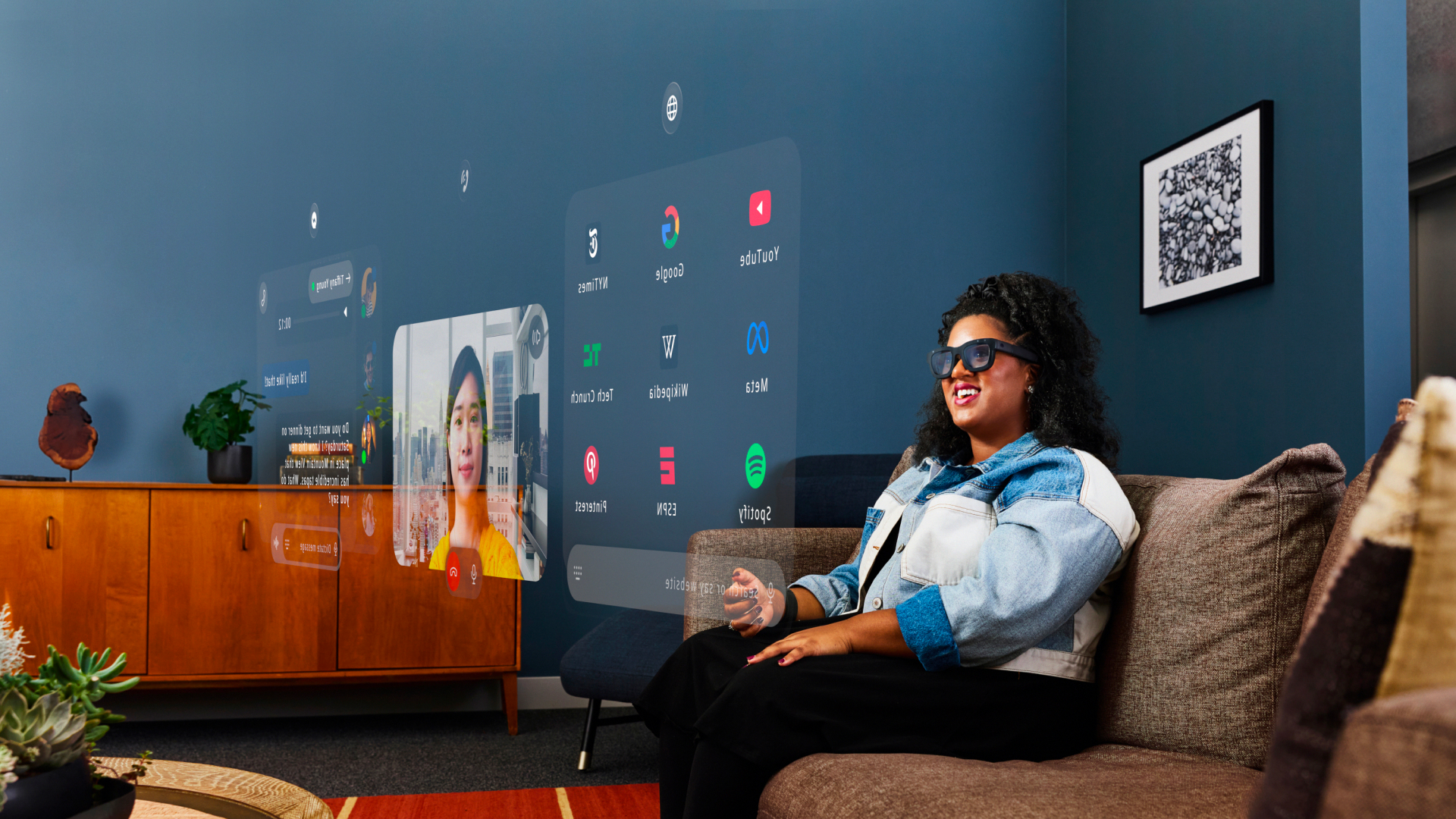
The Future of Augmented Reality Glasses

Meta

  • Five years ago, plans were announced to create AR glasses to blend the digital and physical worlds.
  • Orion, the latest AR glasses from Meta, aims to enhance presence, connectivity, and empowerment.
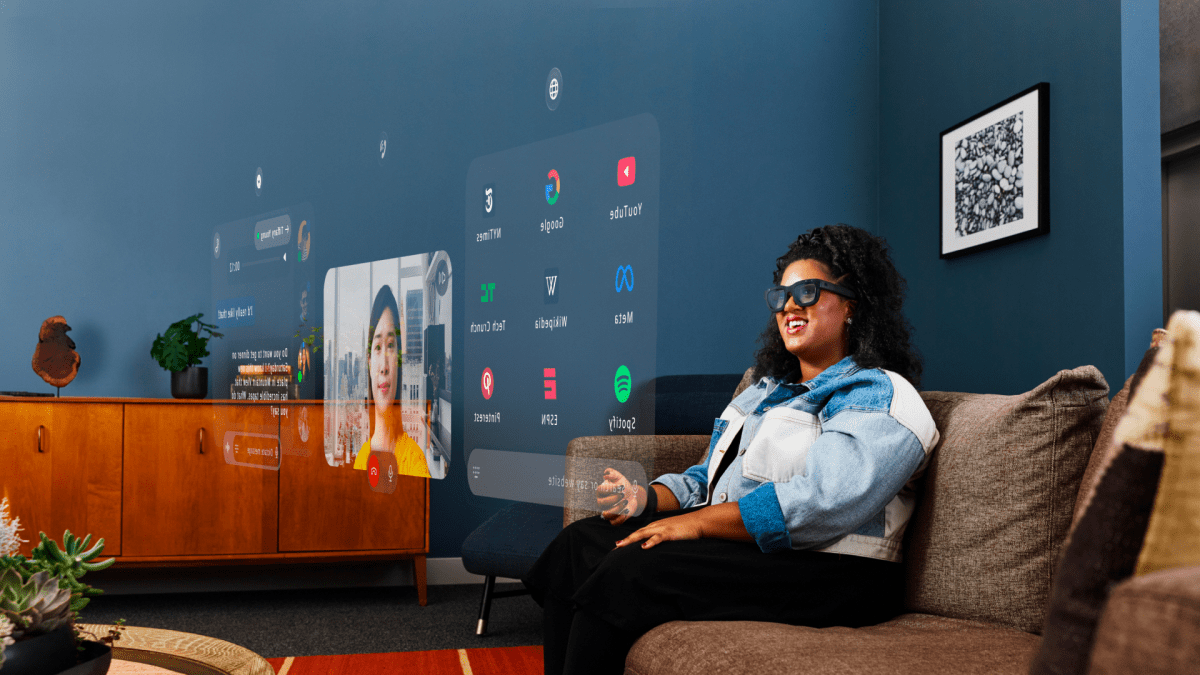
  • AR glasses offer unrestricted digital experiences with large holographic displays.
  • Contextual AI integration allows for proactive addressing of user needs.
  • Orion stands out for its lightweight design, indoor/outdoor versatility, and emphasis on interpersonal interactions.
  • Orion represents a significant advancement in AR glasses technology, combining wearability with advanced features.
  • The groundbreaking AR display in Orion offers immersive experiences and a wide field of view.
  • Orion’s unique design maintains a glasses-like appearance, allowing users to see others’ expressions.
  • Orion’s capabilities include smart assistant integration, hands-free communication, and immersive social experiences.
  • While not yet available to consumers, Orion serves as a polished product prototype for future AR glasses development.

OP: Introducing Orion, [Meta’s] First True Augmented Reality Glasses

Snap

Sophia Dominguez, the Director of AR Platform at Snap, discussed Snap Spectacles and the company’s AR initiatives at the Snap Lens Fest original post here.

  • Snap Spectacles can be connected to a battery pack for extended use beyond the standard 45 minutes, with a focus on B2B interactions that directly engage consumers.
  • There is a push for Snap to collaborate with various businesses, such as those in location-based entertainment or museums, to expand the Snap Spectacles ecosystem.
  • Sophia Dominguez has been involved in AR for over a decade, starting with Google Glass, and now oversees developers and partners creating lenses on Snapchat.
  • Snap’s approach to AR emphasizes personal self-expression as a catalyst for AR lenses, transitioning to world-facing AR lenses like those in Snap Spectacles.
  • Snap’s long-term vision is to make AR ubiquitous and profitable for developers, aiming to integrate digital objects seamlessly into the real world.
  • Snap’s focus on consumer-level AR use cases includes self-expression as a core feature, offering a variety of options for users to engage with AR content.
  • Snap’s AR platform also caters to enterprise and B2B applications, collaborating with stadiums, museums, and other businesses for unique AR experiences beyond consumer-facing lenses.
  • Snap’s technology, like Snapchat cam, is designed for venues to integrate into large screens or jumbotrons, focusing on consumer desires for virality and joy rather than just enterprise solutions.
  • The company aims to increase ubiquity by making lenses fun and approachable, partnering with entities like the Louvre to explore augmented reality possibilities in a consumer-friendly manner.
    HTC Vive has delved into location-based entertainment more than Meta, and Snap is prioritizing connected experiences, ensuring fast connectivity and optimizing for various use cases like museum activations.
  • Snap collaborates closely with developers, offering grants and support without strings attached to foster innovation in the augmented reality space, aiming to be the most developer-friendly platform globally.
  • Snap’s Spectacles have evolved over the years, from simple camera glasses to AR display developer kits, with the latest fifth generation focusing on wearability, developer excitement, and paving the way for consumer adoption.
  • The company has revamped Lens Studio to encompass mobile and Spectacles lenses, emphasizing ease of use and spatial experiences, aiming to create a seamless ecosystem for developers across different platforms.
  • Snap values feedback and collaboration with developers, striving to provide pathways for monetization and support for creators building on both mobile and Spectacles platforms.
  • Snap’s Spectacles offer a unique immersive experience, leveraging standalone capabilities and spatial interactions, aiming to enable emergent social dynamics and experiences not possible on other devices.
  • Developers are considering the length of time users spend on devices like Zoom calls or workouts, with a focus on creating a seamless experience for users on the go.
  • The new SnapOS manages a dual processing architecture for Spectacles, with Lens Studio being the primary pipeline for developers to create content for the device.
  • Snap is actively listening to developer feedback and working on enabling WebXR on Spectacles to support a variety of use cases and experiences.
  • The operating system for Spectacles includes features like connected lenses, hands and voice-based UI, and social elements out of the box to facilitate easier development.
  • The ultimate potential of spatial computing is envisioned as a way to break free from the limitations of screens, allowing for more natural interactions and connections in the real world.
  • Snap aims to empower developers to explore the possibilities of augmented reality and spatial computing, emphasizing ease of use and continuous improvement based on user feedback.

Traversal of Immersive Environments | HoloTile Floor from Disney

If you’re new to The Latent Element, I write about future market development narratives or things of interest to me, hence the name “latent” element. These views are not representative of any company nor do they contain privileged info.

More details and contact info are in the about section.

Post Details

Read time:

3–4 minutes

Table of Contents:

  1. The Challenge
  2. Early Solutions
  3. Disney Research HoloTile Floor
  4. Closing Thoughts
  5. Sources

Subscribe to get access

Read more of this content when you subscribe today.

My Experience Working Out At-Home During the Global COVID-19 Outbreak

At first glance, this post might sound pedantic, for comprehensive info on the Corona Virus visit the WHO Q&As or CDC. This post is in regard to immunological fitness and how the virus is spread and my personal method of using virtual reality as an additional form of exercise:

The disease can spread from person to person through small droplets from
 the nose or mouth which are spread when a person with COVID-19 coughs or 
exhales. These droplets land on objects and surfaces around the person. 
Other people then catch COVID-19 by touching these objects or surfaces, 
then touching their eyes, nose or mouth


source: https://www.who.int/news-room/q-a-detail/q-a-coronaviruses

For the above reason, gyms and other typically crowded workout facilities are out. However, exercise is still a key part of staying healthy, more on this further down. I’ve been using an at-home workout strategy using virtual reality for over two weeks and I’d like to share why this is working for me.

TLDR

If you own a VR headset; some titles that could be used for cardio are:

- Beat Saber
- Box VR
- OhShape
- Thrill of the Fight
- Synth Riders
- Creed: Rise to Glory
- Until You Fall

Active titles that can be modified to be more of a workout:

- Rec Room
- RacketNX
- Pistol Whip
- Lone Echo
- Superhot VR

For general standing activity to afford you some low intensity movement:

- Racket Fury
- Sports Scramble
- VRChat

Virtual reality is a little known option for folks as it relates to fitness, but now we know at my company YUR that thousands of people use VR games daily to workout in a fun and efficient way. The big difference is that while wearing a VR headset you are completely immersed in playing the role of a player in a game. It’s important to note that this trend towards immersive fitness is visible with Peloton, Les Mills, and other fitness names.

YUR monthly view

My month so far has been characterized by workouts between 250 kcals and 750 kcals as you can see, every day (except for March 4th). I’ll tend to use games such as Box VR or Beat Saber, and with YUR the cool part about this is any game can be played and tracked which allows for constant novelty the moment you feel bored of your current exercise regime. This doubles as a benefit if you are feeling cooped up at home.

… with YUR any game can be played and tracked which allows for constant novelty the moment you feel bored of your current exercise regime

I would characterize the kind of workouts I do in VR as plyometric, and explosive in nature similar to a HIIT workout. However, this is up to your personal preference.

As a perennial gym-goer, I have to point out here what VR workouts are not providing me and others. Hypertrophic or strength benefits from lifting weights, cycling, rowing, calisthenics, and running are all different from VR workouts.

So how does staying immunologically fit factor into this as well as COVID-19? I’m not posing a risk to others (as long as I am the only one using my VR headset). By doing this I’m participating in a community.

To be immunologically fit, you need to be physically fit. “White blood 
cells can be quite sedentary,” says Akbar. “Exercise mobilises them by increasing your blood flow, so they can do their surveillance jobs and seek
 and destroy in other parts of the body.” The NHS says adults should be 
physically active in some way every day, and do at least 150 minutes a week 
of moderate aerobic activity (hiking, gardening, cycling) or 75 minutes of 
vigorous activity (running, swimming fast, an aerobics class).

`source: https://www.theguardian.com/lifeandstyle/2020/mar/08/how-to-boost-your-immune-system-to-avoid-colds-and-coronavirus`

So basically, in the middle of my day between 1 pm or 6 pm, I throw my Oculus Quest on and workout for maybe half an hour or so. I hope that this has been insightful to you and if you have a VR headset perhaps this can factor into your virus response.

This post initially appeared on my Linkedin.

Oculus Connect 6 Takeaways

Ahead of Oculus Connect 6 (OC6), I attended the Oculus Launchpad and Start dinner tonight. I saw a ton of vibrant communication and hopes for the next few days. In no small order, developers were internationally based, from places such as Canada and New Zealand. I noticed a pattern of developers who seem to be holding full-time jobs all the while in pursuit of publishing an app to the Oculus Store.

Reblog: Adventure at the 5th Oculus Connect Conference

oculus_connect_5_dilan.png

The following is a write up from a friend, Kathryn Hicks, on the Danse blog. The link to the original is at the bottom. 

Last week I attended the 5th Oculus Connect Conference held at the San Jose McEnery Convention Center. This two-day conference is held annually during the fall, which showcases the new virtual reality technology from Oculus. It was my second time attending, and it felt even better than the last one.

During the Keynote address, Zuckerberg announced a wireless headset that doesn’t need a cell phone, and an external computer. The Quest, a standalone headset with 6 degrees of freedom, touch controllers and is a potential game-changer for the VR industry. If you are familiar with the Rift and the Oculus Go, the Quest would be a marriage of the two. The Quest is scheduled to come out this spring and will be $399, and a lot of the Rift titles will be available on the Quest. While unfortunately, I was not able to try it, the feedback that I heard from others was positive. The tetherless aspect of the headset creates a more immersive experience and doesn’t feel confined. While the graphics capabilities of the headset are not as high as the Rift, they are good enough and don’t hinder the experience. Plus the optics, as well as the sound, have improved from the Oculus Go. On the downside, the Quest is reportedly top heavy and a denser headset than the Go, which I find the Go to be more substantial than the lightweight Rift. Since the Quest has four inside out cameras on the front of you, if you move the controllers behind you, you could potentially lose tracking. Hopefully, they will make these adjustments before it launches in the spring and add tracking on the strap. I can see much potential with the Quest, such as eSports, education, businesses, medical, engineering, set design; the list goes on. The possibilities are endless, and for the price point, it could substantially increase VR users. Considering that the Quest will be the price of most gaming consoles, without the need of television or home set up.

Walking around the conference was lovely, I felt like a kid in a candy store seeing people putting their full body into the Quest. The well-orchestrated design layouts and theme of the different experiences were terrific. It was a pleasure hearing eSports commentary and cheers as competitors go head to head playing Echo Arena and Onward. Seeing the VR community connect, share laughs, smile, and have a good time, warmed my heart. I enjoyed watching people play the Dead & Buried Quest experience in a large arena and seeing their digital avatars battle each other on screen. I can see more VR arenas being built specifically for the Quest, kind of like skate parks, or soccer parks, but with a sports stadium vibe.

While I was at the conference, I tried a few experiences like The Void – Star Wars Secrets of the Empire, which is a full sensory VR experience. You are an undercover Rebel fighter disguised as a Stormtrooper, as a user you get to interact with your teammates fully, feel, and smell the environment around you. It was a fantastic experience, and I would encourage others to try it at one of the nine locations.

Another experience I tried was the Wolves in the Walls a VR adaptation of Neil Gaiman’s book and created by the company Fable. The audience explores parts of Lucy’s house to try and find hidden wolves in the walls. It was a more intimate experience, and Lucy’s performance felt pretty lifelike. The environments and character designs were beautifully portrayed. Overall it was an enjoyable VR experience.

I also played a multiplayer combat experience called Conjure Strike by The Strike Team. It’s an engaging multiplayer experience, which you can play as a different rock like characters that have different classes like an Elementalist, Mage Hunter, Earth Warden and more. The multiplayer session I had played was similar to capture the flag game. One player has to push a box toward the other side while the opposing player stops the player. It was a fun experience similar to that of Overwatch but in VR. The multiplayer mechanics were excellent, but some of the controls felt foreign to me. Overall it’s an engaging game that seems like it would be popular amongst most VR users.

While I didn’t get to play as many demos as I would have liked, I enjoyed the ones I experienced, especially The Void. It was the most immersive experience I tried, the few things I would change are: update the headset and enhance the outside temperature and wind strength.

I’m looking forward to more development put towards, the Quest and I’m optimistic about the future of VR. As a team member at The Danse, I am excited to work on projects utilizing immersive technology such as virtual & augmented reality. Also, to work in an industry, the is ever changing and improving. It’s nice coming back to the Oculus Connect Conference and see the community excited about the future of VR.

Design Iteration for Oculus Go


Design iteration when building for the Oculus Go

With 6 degrees of freedom headsets like the Oculus Rift and HTC Vive, when working in Unreal or Unity3d, it takes only a push of the play button to test your application in the headset.

There are advantages to seeing your scene from within your headset such as how your first-person perspective is developing, checking performance metrics in HUD, checking in on rendering weirdness, or correcting for relative spacing. However, the constraint of having to deploy by building and running to the Oculus Go each time we needed to check something can lessen your appetite for quick checks like this. Besides, sometimes is not even necessary.

That’s why a quick way of iterating on your scene using traditional desktop inputs is nice. Typically duplicating a currently under-construction scene into two versions. One called “site tour” for example and another called “site tour desktop”. The naming convention splits up functionality so that when you need to test something using mouse and keyboard you quickly hop into the “site tour desktop” scene. Some example mappings include UI navigation with a pointer or locomotion. The UI navigation can be done using the left mouse button and cursor instead of shipping to Go and using the hand controller. The locomotion can be done using your keys ‘w’,’a’,’s’, and ‘d’, as is common to most FPS games, to move around the space and the mouse to click and drag to move your head instead of having to teleport.

Diving deeper on the locomotion example

By throwing on headphones and using a Fly script applied to the Main Camera to test quickly using WASD within the Unity editor, you’ll be able to check relevant aspects of your lighting, audio, animations, etc without needing to wear the Go.
sample:

void Update()
{

    if (Input.GetMouseButton(0))
{
yaw += Input.GetAxis(“Mouse X”) * lookSpeed;
pitch += Input.GetAxis(“Mouse Y”) * lookSpeed;
pitch = Mathf.Clamp(pitch, -90.0f, 90.0f);
}

transform.localRotation = Quaternion.AngleAxis(yaw, Vector3.up);
transform.localRotation *= Quaternion.AngleAxis(pitch, Vector3.left);

transform.position += transform.forward * moveSpeed * Input.GetAxis(“Vertical”);
transform.position += transform.right * moveSpeed * Input.GetAxis(“Horizontal”);
transform.position += transform.up * 3 * moveSpeed * Input.GetAxis(“Mouse ScrollWheel”);

}

For the purposes of testing out spatial audio, I’ve noticed it’s great––mimicking head movement by panning using the mouse x.


Turning to the Oculus Rift

For what it’s worth in a post that’s supposed to be about the Oculus Go design iteration loop. In progress with an Oculus Go app currently, I and a friend find the utility of swapping a project over to the Oculus Rift to be really helpful.

What this does for you is, allow you to take advantage of the Oculus Rift during Play Mode (in Unity) which gives way to much faster iteration time. Perfect for quick fixes to code and cohesion of various parts (for example, like Teleportation and UI).

Relationships Matter: Maximizing Retention in VR


Relationships Matter: Maximizing Retention in VR
Isabel Tewes
isabel@oculus.com

There are many ways to measure success, but coming from the mobile world (push notification
strategy, the habit of retention mini-games, funnel analysis, making a real difference when multi-million userbases exist) Isabel talked about retention today.

Retention defined

When someone loves your app and comes back to it time and time again.

Make a great first impression

  • pinpoint your magic
  • get to that moment quickly
  • guide people through their first experience

Share your personality

  • create a tone and stay consistent
  • rethink your interactions
  • identify the pain points
  • design against them / take advantage of them

Create a lasting connection

  • make the right decisions early

First Contact – Bernie Yee

He focused on how VR can be really overwhelming and having someone acknowledge your actions can be really powerful.

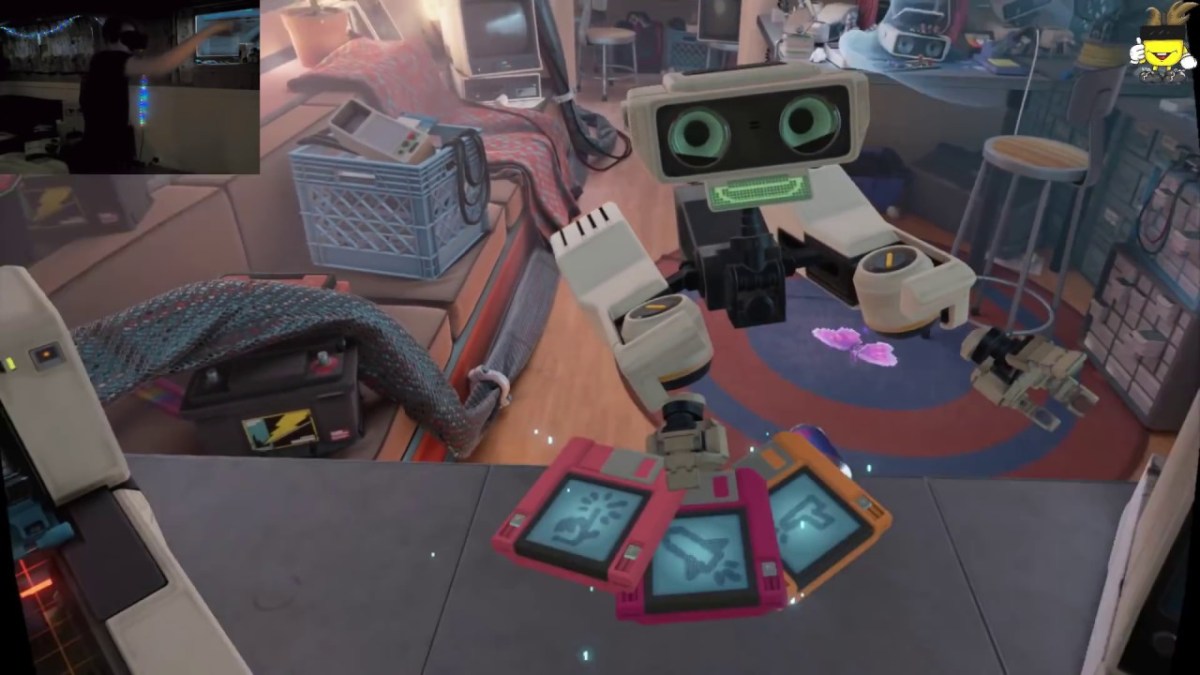
The Significance Robot Waving – the way the robot waves to you at the beginning of the experience draws upon a universal sign. You know you’re supposed to wave back. The personality of your wave then comes out as well.

Wave Finding – Helped guide users through the experience the robot is helping to guide your
attention to where you should be going.

Nudge – Nudge your users patiently and with intent

Rick and Morty – Virtual Rick-ality

Establish a tone and be consistent

Against Gravity – Rec Room

Create a safe environment that people come back to
Minimizing trolling and harassment
“Whatever you are when your [organization] is small remember you’ll only be a larger version of that”

Making friends in Rec Room
Two people making friends in Rec Room is done by shaking hands with someone.

High fiving in Rec Room

Upshot: Create your values early and stick to your values ruthlessly.


SVVR #49 Summary Notes

SVVR Meetup #49

SVVR Passport – A membership program

This is SVVR’s new shared co-working space for demonstration

  • 24 hour access
  • Demo equipment and library
  • Digital benefits

SVVR VR Mixer 2018

  • March 21st, 2018

Lumus Optics

  • Israeli company doing reflective wave-guide optics whose mission is to be your
    leader in AR displays––more than 60 patents
  • Highest performance for smallest form factor
  • What is wave guide tech?

This boasts

  • Wide FOV (40˚ – 55˚)
  • Compact 1.7mm Form Factor
  • Life-like Image
  • True See-Through
  • Daylight Readable

Founded in 2000
Partnered with Quanta Computer (going to produce the optics engine),
Flex (OEM using Lumus reference), and Deepoptics (vergence accommodation)

They have debuted their new prototype at CES––looks like Dragon Ball equipment.

Developers

Will be able to deploy Vuforia applications or demos using other AR libraries via this.

siram@lumus-optical.com

High Fidelity – Philip Rosedale

  • Probably gonna need
    • Identity
    • IP rights
    • Proof-of-purchase
    • Payment system

Full Decentralization?

Transaction expenses are high (syncing, VR transactions need to happen quickly,
must pay gas)
Federated Consensus – near-zero transaction fees, etc.

Bad Monetary Policy

  • Bitcoin for being usable as a currency isn’t viable. Because Bitcoin is going up in
    price so much and it’s fixed in circulation.
  • Increase circulation as people join
  • Second Life – made more money at roughly the same rate that people come online
    • Use a smart contract to create an exchange rate scaling

High Fidelity Coin (HFC)

  • Stable
  • Blockchain cryptocurrency
  • Easy to use, initial grants for proof-of-identity, and multiple currency exchange

Philip waxing about tech, says something to the effect of “with any big shift in technology
what often comes as compelling is things that are currently done in the world i.e. payment”

Philip also mentioned via s-contracts allowing duels to occur for identity

Cymatic-Bruce

Currently at 6D.AI

Came back from Japan
Saw so many vr experiences, met a ton of the community, discovered VTubing which
can also be found through IMVU, etc.

Learned a lot and PC VR isn’t a thing with Japan due to space and culture

PSVR location based VR situation

VR Zone Shinjuku-–world class location based experience. Tickets range from $10-15 per experience.
They take first-timers very seriously and interestingly take matters of safety really seriously.
Bruce really admired the standard of using motion platforms for everything, tie everything into an
IP, and did a great job of executing. Looks like he did a DBZ experience, and learned how to shoot a
Kamehamehameha. Mario Kart––on a motion platform, etc.

How long is the experience?
How much of what you saw in Japan will likely have an audience in EN?
How is FOVE doing?
VR experiences dealing with food?

view raw

SVVR-49.mdown

hosted with ❤ by GitHub

Reflection: Bigscreen VR

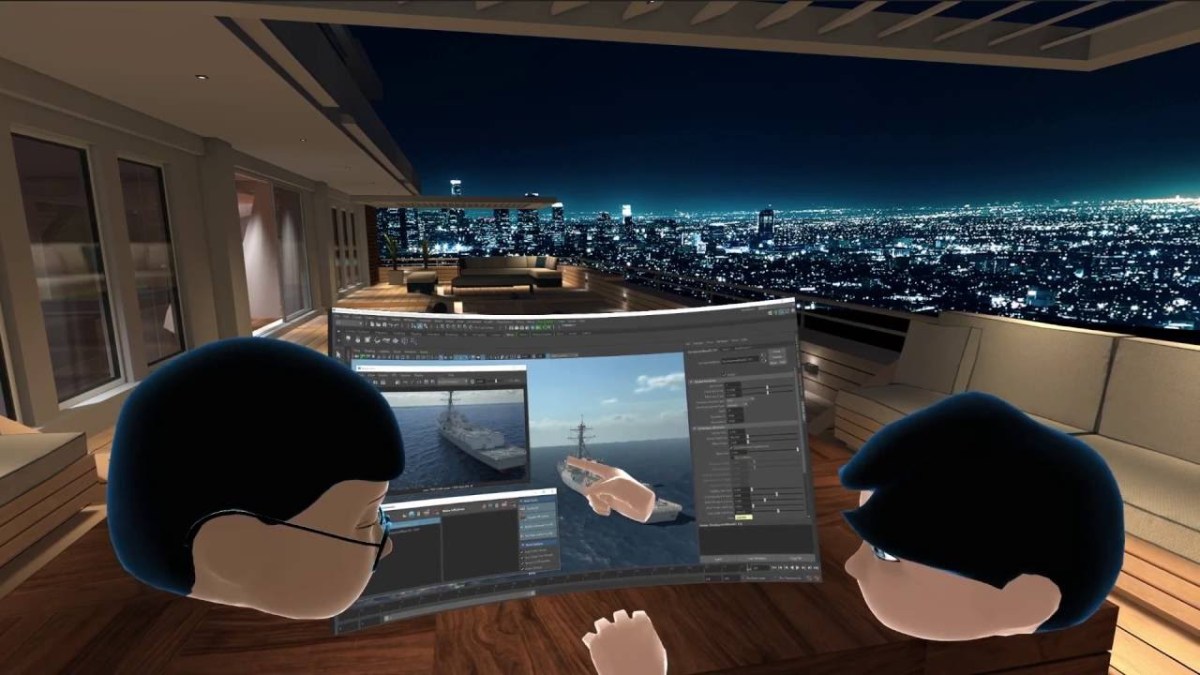
Before I continue I’ll take a step back to define any VR application that brings together people in an environment as “social vr”. What makes Bigscreen interesting is the paradox of choice. In other social applications VR Chat, AltspaceVR, High Fidelity; there are no core activities that you can derive outside of being together, which makes the choices for what you can do very broad. With Bigscreen it’s a display extension or place to watch movies with a cinema experience. Simple.
..
..
Recently I saw that they enticed Paramount (?) studios to do a premiere of Top Gun in VR. I thought that was a nice blend of a social construct we know and love of going to the movies and social VR––though I didn’t attend the screening. I’ve used Bigscreen recently and the environments are nice with physically based shadows and lighting. Bigscreen’s reliance on virtual displays makes it well-positioned to benefit from forthcoming improvements in display clarity.
multiplayer-bigscreen-1400
One thing worth noting is that I haven’t been able to get audio to work for all people in a living room setting. When putting your content on the Bigscreen audio seems to play only for you. This wasn’t the case in the movie theater where a host had no problem playing Rogue One off of Netflix for all to enjoy with sound.
..
..
Finally, when Oculus Home released it’s core 2.0 update everyone on Rift had the ability to see and use their desktop screen in VR. SteamVR also enables desktop viewing. Viveport? Although, today Oculus Home doesn’t offer social as Bigscreen does… this probably effects the uniqueness of their total product and must be considered for continuing fundraising.

OC4 Talks: Designing for Feeling – Robin Hunicke

Notes from OC4 Designing for Feeling – Robin Hunicke

Philosophy of Exploration and Design

Robin opened with her concept of triple E content (a play on AAA, disambiguated below) and extolled the value of figuring out where you want to go first

  • Elegant Expressive and Emotional content (EEE)
  • She presented a 2×2 matrix with high impact, low cost as the quadrant where most content aims… the problem, she expressed, was that the matrix leaves out elegance as a focal point
    Tips
  • Evolve concepts, tools, & solutions, to reduce cost & improve impact
  • Evolve ux
  • Expressive – Players Speak

Process & the Broad Applicability of EEE

Axes in her slide graphic included rational, eee, baroque, and scripted (e.g. Sims, Black ops)

  1. Test your concept like it isn’t your
  2. Throw away ideas
  3. Find the feeling in your idea (lock in on it)
  4. This is your secret sauce
  5. Test the prototype like it isn’t yours
  6. the prototype is different than what is on paper
  7. the process is what helps
  8. Repeat

Luna

Uncertainty is surpassed only by the effort that needs to go into it

For Luna she took inspiration for the design from a paper world feel, influenced by origami, and during the process she packed her mind with fairytales

Not everyone needs to get into hands-on design influences, but she
thought that making origami and the concepts and learning how the
tactile quality turned out were really informative
 I’ve definitely found with Project Futures: The Future of
Farming it’s really key to actually gain some influence from real world knowledge and folks that have built
constructs or structures that are going to lend to the look and feeling of the world space in the app. Namely
Infarm.

One important side note Robin dropped was that none of the characters in Luna have genders.

Other Random Notes

  • Mood boards
  • Luna started out as a PC and VR title from the beginning
  • The demo and vision existed before the actual prototype (i.e. the hands
    controlling the stars)
  • Tested prototype part 2 and threw it away
  • Music is integrated into the testing process with feeling at the center, namely, “what kind of feeling is it communicating?”

Timeline
4 year process for Luna – started out as a drawing in a book

  • They went through a massive phase where no VR was implemented, then in November 2016 it came to life in VR (7 person
    team)
  • By 2017 the pieces are starting to become cohesive and informed by the feeling

Fail Forward was key, it takes a lot of work.

Have to lean into the idea of interesting different challenging titles

UPSHOT = Diverse and inclusive teams, failure is ok, and the belief that you’re
going to get there. Leads to the triple EEEs and successful titles.